
SEARCH BLOG POSTS
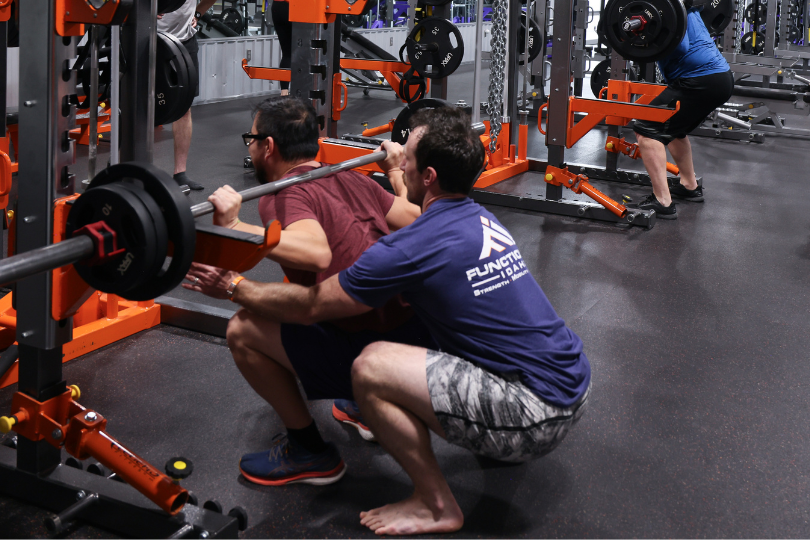
Faith in Motion: How Spiritual Practice and Fitness Intersect for Whole-Body Wellness
What if your workout was more than just a way to burn calories or build muscle? What if showing up to the gym was also a way to build discipline, consistency, and a deeper sense of purpose?
For Marshall Weber, owner of Functional Idaho and founder of the Faith and Fitness class, that is not a metaphor. It is the foundation of everything he does. Over years of training, coaching, and recovering from serious injuries, Marshall has developed a deeply personal understanding of how faith and fitness are not separate pursuits, but something that can work together to shape the way people move, recover, and live.
For many people, faith and fitness are treated as completely separate parts of life. But for Marshall, physical training, spiritual discipline, recovery, and longevity all work together. His approach to faith-based fitness is not centered around perfection or appearance. It is about learning how to move with purpose, care for your body, and build habits that allow you to better show up for your family, work, and community.
I sat down with Marshall to talk about how prayer, intentionality, humility, and learning to listen to his body have shaped the way he trains, coaches, and helps others move well for life.
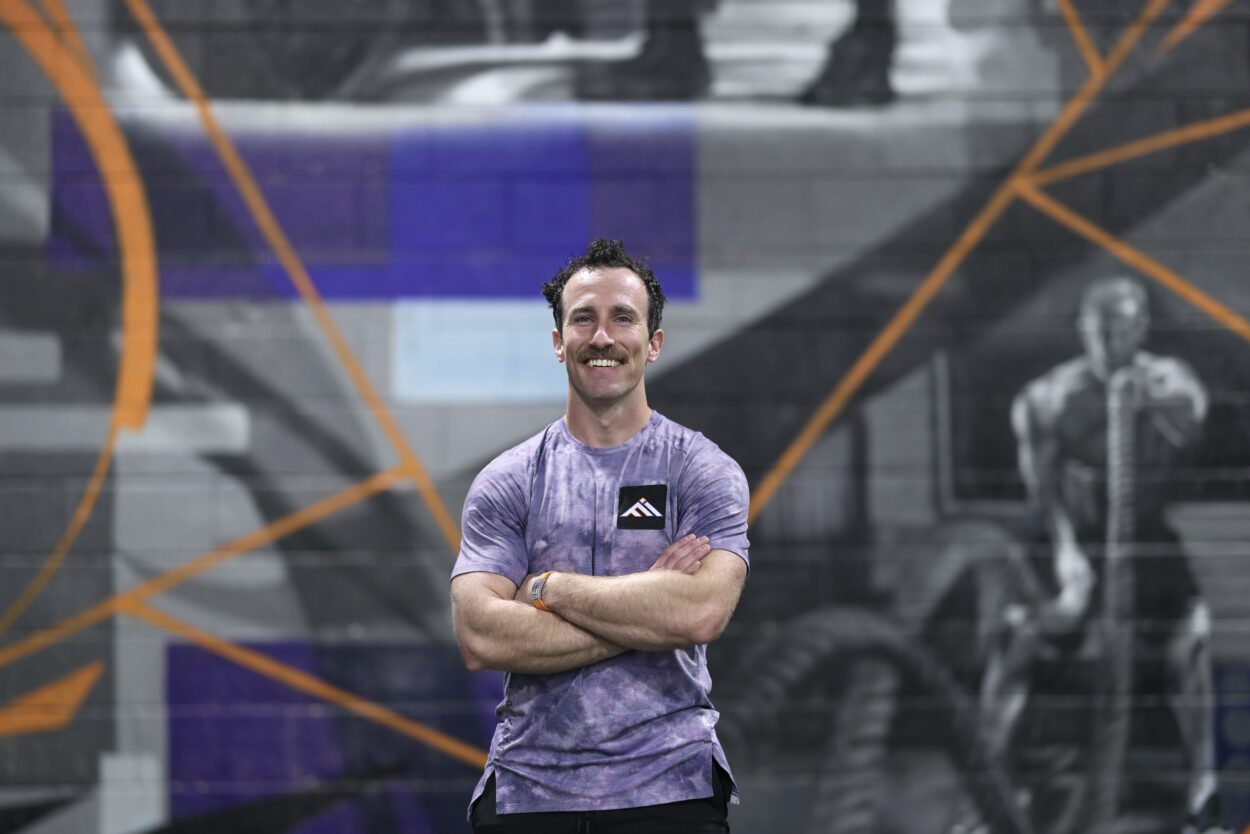
How Injury and Faith Transformed One Trainer’s Approach to Fitness
For most people, fitness starts as a physical pursuit. You want to get stronger, lose weight, or simply feel better in your body. Marshall was no different, until a series of injuries forced him to look deeper and ask bigger questions about why he was moving in the first place.
“The defining moment where fitness was spiritual and not just physical would be whenever I’ve been injured and I’ve wanted healing,” Marshall said. “Pain always has a purpose.”
Early in his twenties, Marshall blew his back out deadlifting with an unfamiliar trainer. By the time he tried to get into his car afterward, he could not bend his knees to his chest. Doctors told him he might never squat or deadlift again. Then came the concussions from hockey. Then the recurring back injuries that followed him into his coaching years, each one tied to a moment of ego, impatience, or cutting a warm-up short.
“I’ll repent and be like, God, I know you didn’t do this to me, but I know that things happen for a reason,” he said. “And I promise I’ll never cut my warm-up short again. Just please heal me so I can move things and have fun.”
That pattern of injury, humility, and recovery became the foundation for Marshall’s coaching philosophy. It taught him that the body is not just a machine to optimize. It is something to be listened to, respected, and cared for with intention.
Using Fitness and Faith to Serve Others
Marshall spent years chasing a dream of playing professional hockey, and the further he pursued it, the more he found himself digging into an unhealthy lifestyle. The turning point came in his kitchen, in tears, asking God what he was actually supposed to do with his life.
“It was very apparent that he wanted me to use the gifts and talents I have to help other people,” Marshall said.
That shift led him to open Jack City Fitness in 2011, which eventually became Functional Idaho. And something unexpected happened: when he stopped training for himself and started training others from 6am to 8pm, he barely worked out at all. When he finally started moving again, gradually and without ego, every performance marker he had previously hit improved.
“By doing less, I saw more of what I wanted, indirectly,” he said.
That experience became the cornerstone of what Marshall calls the minimal effective dose, the idea that fitness, when it becomes an idol, can actually take away from other important areas of life. But when fitness is held in the right proportion alongside faith, family, and work, it gives back more than it takes.
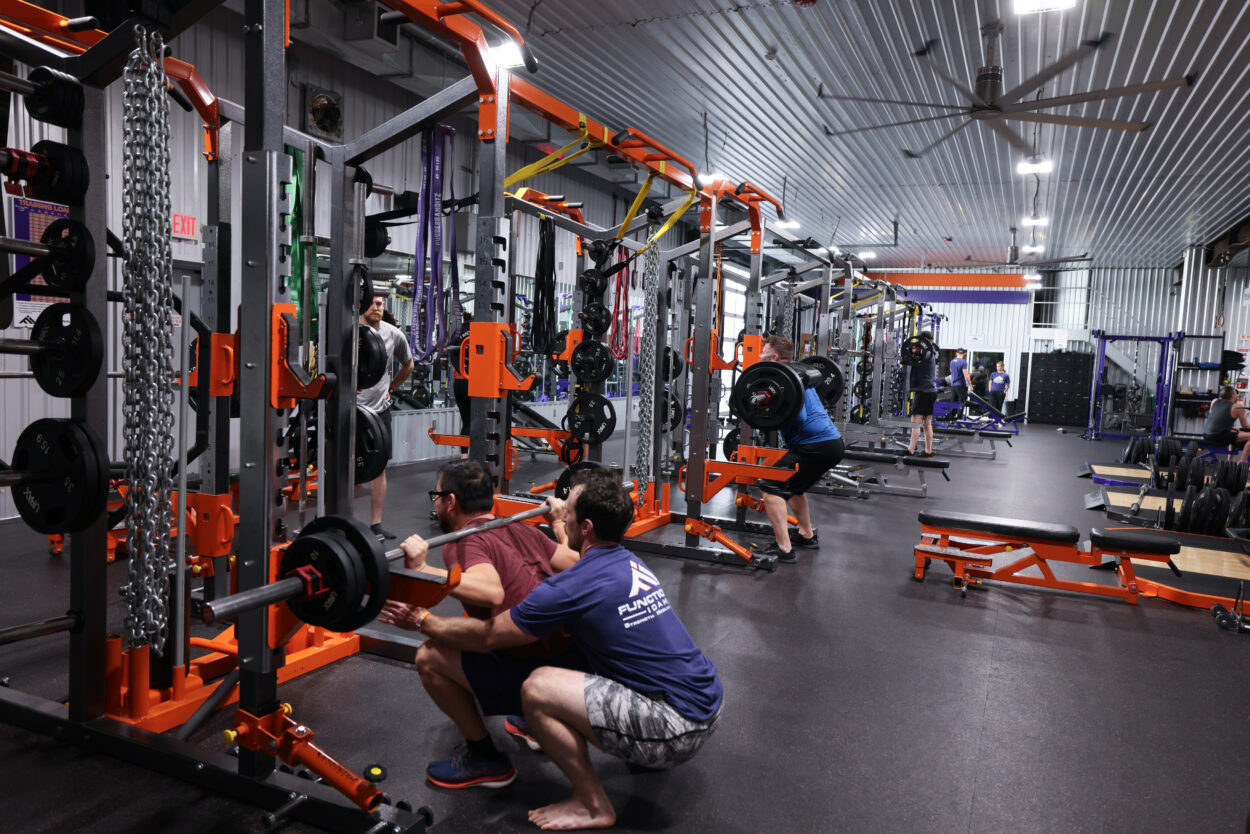
Why Faith-Based Fitness Is About More Than Physical Health
Marshall uses a simple image to explain how he thinks about a balanced life: a four-legged stool. The four legs are your spiritual walk, your health, your profession, and your family. Pull too much energy toward one and the whole thing wobbles. Neglect one entirely and it falls over completely.
“If you can put health and fitness in the right amount and not focus on it more than your walk with God or your relationship with your family or your profession,” he said, “that’s where it’ll benefit you more versus take away from other areas of life.”
This is the heart of what makes Marshall’s approach to Christian fitness and faith-based fitness different from many traditional fitness philosophies. Fitness is not the ultimate goal. It is one of the pillars supporting a healthy, sustainable, purpose-driven life.
Understanding the Difference Between Discomfort and Pain in Your Workouts
One of the most practical things Marshall talks about is the distinction between discomfort and pain, and why getting that wrong is one of the most common mistakes people make.
Discomfort is growth. It is the burn in your legs during a hard set, the shakiness at the end of a workout, or the feeling that you challenged yourself somewhere new. Resistance training is also one of the only activities shown to increase the density of the prefrontal cortex,, the part of the brain responsible for decision-making and self-regulation.
“When you’re moving the weight, your body has to constantly differentiate between discomfort and pain,” he said. “And as you get mature and as you listen more to your body, you can actually grow your brain.”
Pain, on the other hand, is a signal worth listening to. Marshall calls this the red line, a personal threshold that tells you how far you can go while still moving forward safely.
“If you have a back injury, you still need to lift weights. You still need to squat. You still need to deadlift,” he said. “But when you have that pain, you need to say, today it’s a three, and every movement I do, I’m going to keep it below a three.”
That might mean deadlifting with one pound. It might mean slowing everything down and moving with intention instead of intensity. The goal is to keep moving, because movement is medicine, but to do it while learning to listen honestly to your body.
Why Starting Your Workout with Intention Changes Everything
Marshall’s Faith and Fitness class does not always open with a scripture reading or a formal prayer, but what it always starts with is intentionality and a willingness from Marshall himself to be vulnerable.
“I try to lead by being vulnerable,” he said. “Telling people, this is bothering me. This is something I’m not good at. That helps people open up.”
When people start from a place of honesty rather than performance, something shifts in the room. The competition drops away, the comparisons quiet down, and people begin to listen to their bodies instead of fighting them. The structure of the class, which Marshall calls Follow the Leader, reflects this philosophy. He leads from where he actually is that day, not where he wants to be or where he was six months ago.
“Sometimes that means telling the class, today I’m not going to be loading my body because I’ve had too much stress or something’s hurting,” he said. “Me leading in that way shows them that showing up still matters, even when it’s not your best day.”
That mindset has also helped create a strong sense of accountability within the class itself. Dan, a longtime partner who attends Marshall’s Faith and Fitness class at Functional Idaho, says the consistency and structure have helped him stay committed in a way traditional workouts never did.
“The biggest thing is the accountability. I know Marshall is counting on me and the other guys in the group are counting on me.” Dan shared. “Just getting in at that steady cadence for two years here, I mean it’s the most consistent I’ve been working out since college. So it’s really made a big difference just to make consistent progress.”
For Dan, the class created a rhythm that made fitness feel more sustainable instead of something he constantly had to restart.
Simple Ways to Integrate Spiritual Practice Into Your Fitness Routine
You do not have to be in the Faith and Fitness class to start weaving spiritual practice into the way you move. Marshall offered a few practical starting points. One of the simplest places to start is listening to worship music during your workout.
He referenced a study comparing high-intensity motivational music to calm, relaxing music during workouts, and the results were counterintuitive. The relaxing music actually led to higher output, because it allowed the body to stay loose and recover between efforts rather than staying in a state of constant stimulation.
“When I read the study, I tried it, and I was really mad that it worked,” he laughed.
Marshall also believes that movement itself can be an act of faith, even without a formal prayer or an open Bible. He describes it as using your life as a mirror image of God, showing up with care, humility, and intention not because someone is watching, but because that is what honoring the body looks like in practice. You do not have to announce your faith at the gym or start every session with a devotional. When you move with purpose, listen to what your body needs, and treat the people around you with genuine care, that is already an expression of something deeper. For Marshall, that mindfulness, the quiet awareness of why you are moving and who you are moving for, is what transforms a workout into something that feeds your spirit as much as your body.
Beyond music and scripture, Marshall returns again and again to the idea of simply listening, to your body, to the quiet voice that says you do not need to go heavier today, and to the people around you who genuinely care about how you are doing.
“Consistency over intensity, every time,” he said. “Showing up once a week for five months is more important than working out five days a week until you’re so sore you quit.”
Honoring Your Body as a Spiritual Practice: The Faith in Motion Mindset
What Marshall is describing is not a niche religious program for a specific type of person. It is a fundamentally different relationship with your own body, one built on honesty, humility, and the long-term belief that how you care for yourself has everything to do with how well you can show up for everything else in your life.
You do not have to have a specific faith background to recognize the wisdom in that approach. Slow down, listen to your body, keep moving even when it is hard, and show up consistently rather than perfectly. Those principles serve everyone, regardless of where they are starting from.
And if you want to explore what faith-grounded fitness looks like inside a community that will meet you exactly where you are, Marshall’s Faith and Fitness class at Functional Idaho is a great place to start.
Ready to move with purpose? Claim your FREE tour and consultation at Functional Idaho and experience firsthand what it looks like to train for strength, mobility, and longevity, body, mind, and spirit.
Sources
- https://pmc.ncbi.nlm.nih.gov/articles/PMC6617693/
- https://pmc.ncbi.nlm.nih.gov/articles/PMC12859869/
- https://pubmed.ncbi.nlm.nih.gov/32981580/
- https://www.precisionnutrition.com/minimal-exercise
- https://pmc.ncbi.nlm.nih.gov/articles/PMC5435671/
- https://pmc.ncbi.nlm.nih.gov/articles/PMC280237
- https://pmc.ncbi.nlm.nih.gov/articles/PMC9877502/