SEARCH BLOG POSTS
The Skill That’s Costing You Your Conditioning
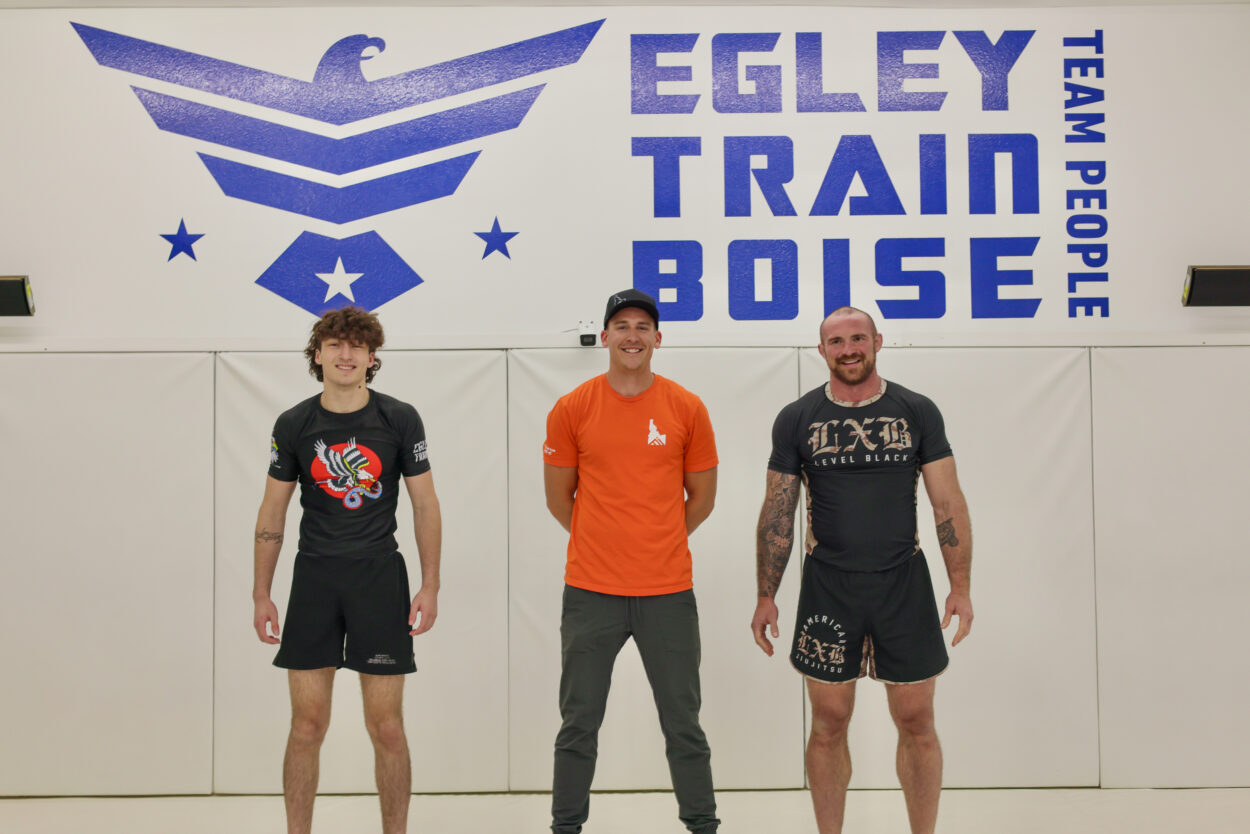
Guest post by Michael Egley of Egley Train Academy
Most athletes don’t fatigue because they’re out of shape.
They fatigue because they never learned to relax.
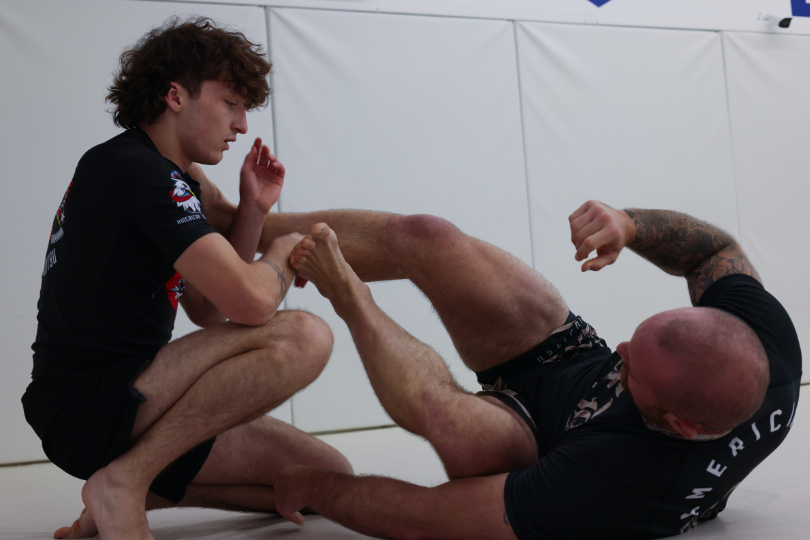
I see it every week at Egley Train Academy in Boise, Idaho. A new student steps on the mat for their first live round of American Jiu-Jitsu. Someone grabs them. Pins them. The round gets hard. And instantly, the whole body locks up. Jaw clenched. Shoulders pinned to the ears. White-knuckle death grip on whatever fabric they can find. Every muscle firing at 100%.
It’s not weakness. It’s human. Fear triggers tension. That’s your nervous system doing exactly what it was designed to do.
But here’s the problem: 100% tension is not sustainable for more than about ten seconds. And a five-minute round is three hundred seconds long.
So what happens? They gas out in ninety seconds. Not because their cardio failed. Because their body never turned off. They burned through their entire tank gripping, bracing, and fighting their own muscles — not their training partner.
There’s an old saying: “fatigue makes cowards of men.” When you’re exhausted, your will breaks down. You can’t think. You can’t move. You can’t perform. And more often than people realize, that exhaustion isn’t from lack of fitness. It’s from never turning off.
This is what I call selective tension.
Maximum force when you need it. Complete relaxation when you don’t. Back and forth, on and off, like a switch. That’s the skill.
The best athletes I’ve ever trained with — the ones who are still dangerous in the fifth round when everyone else is surviving — aren’t necessarily the most conditioned. They’re the most efficient. They know when to fire and when to float. They’ve trained the transition between tension and release until it’s automatic.
What it Looks Like On the Mat
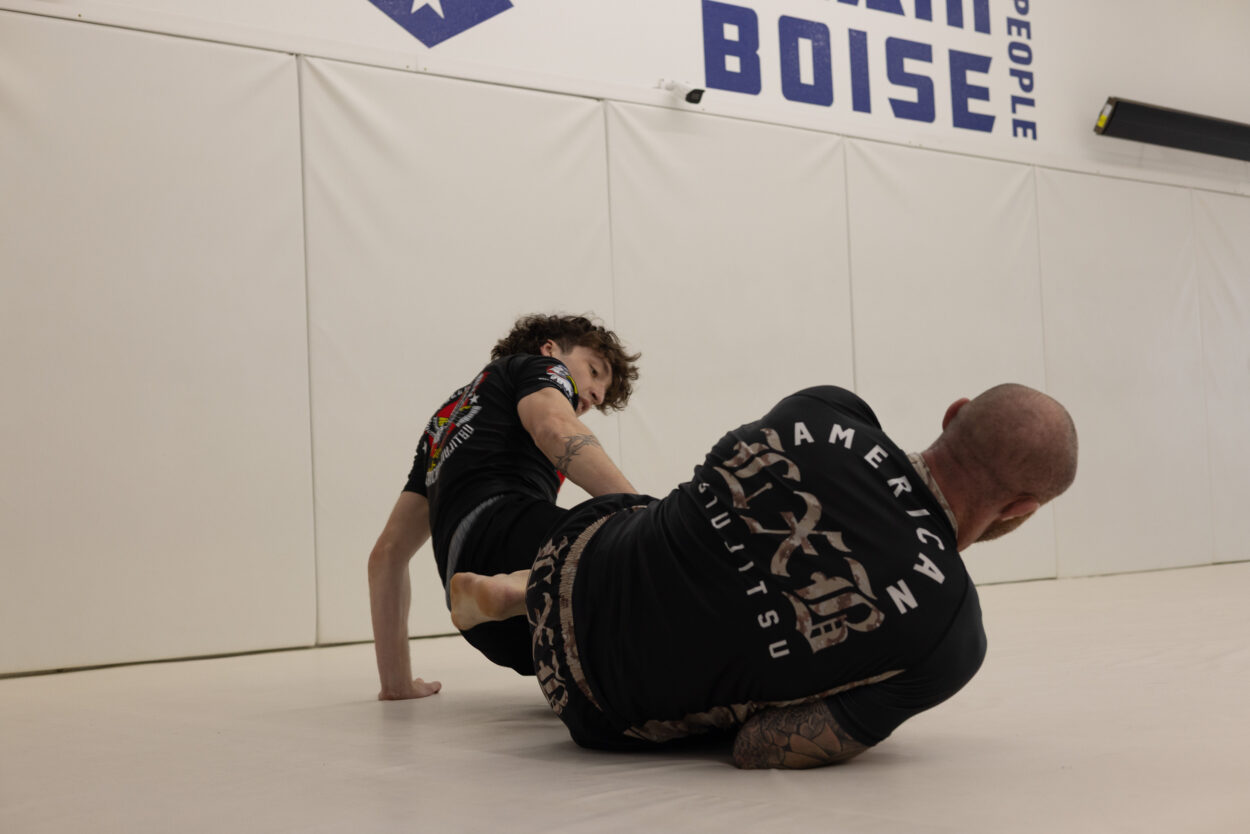
Here’s what I coach my beginners to do. After every round, before the next one starts, I tell them: shake it out. Open and close your hands. Roll your neck. Drop your shoulders. Take three deep, slow breaths — in through the nose, out through the mouth. Deliberately return your body to a relaxed state before the next effort begins.
Most athletes use rest time to stay braced. Stay ready. Stay tense. That’s exactly backwards. Your rest is where you practice release. If you can’t relax when nobody’s attacking you, you have zero chance of relaxing when someone is.
Then, during the round itself, we work on the same principle in real time. You don’t need a death grip on the collar when you’re just maintaining position. You don’t need your whole body rigid when only your hips need to be heavy. Tension is a resource. Spend it where it matters. Save it everywhere else.
Over time, the transitions get faster. The student starts to feel the difference between productive tension and panic tension. And their rounds get longer, their recovery gets faster, and their performance goes up — without a single extra minute of cardio.
Where the Kettlebell Becomes Your Teacher
This is where the connection between the mat and the weight room becomes undeniable.
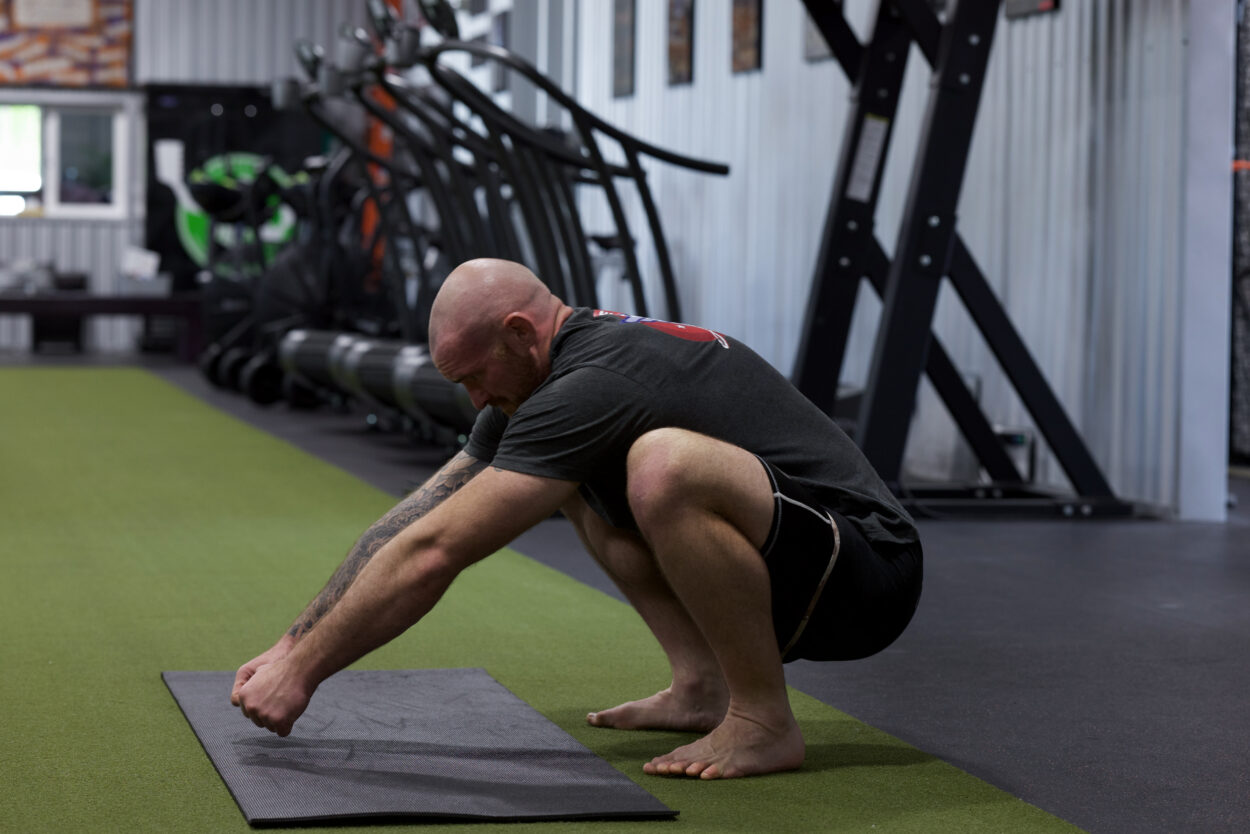
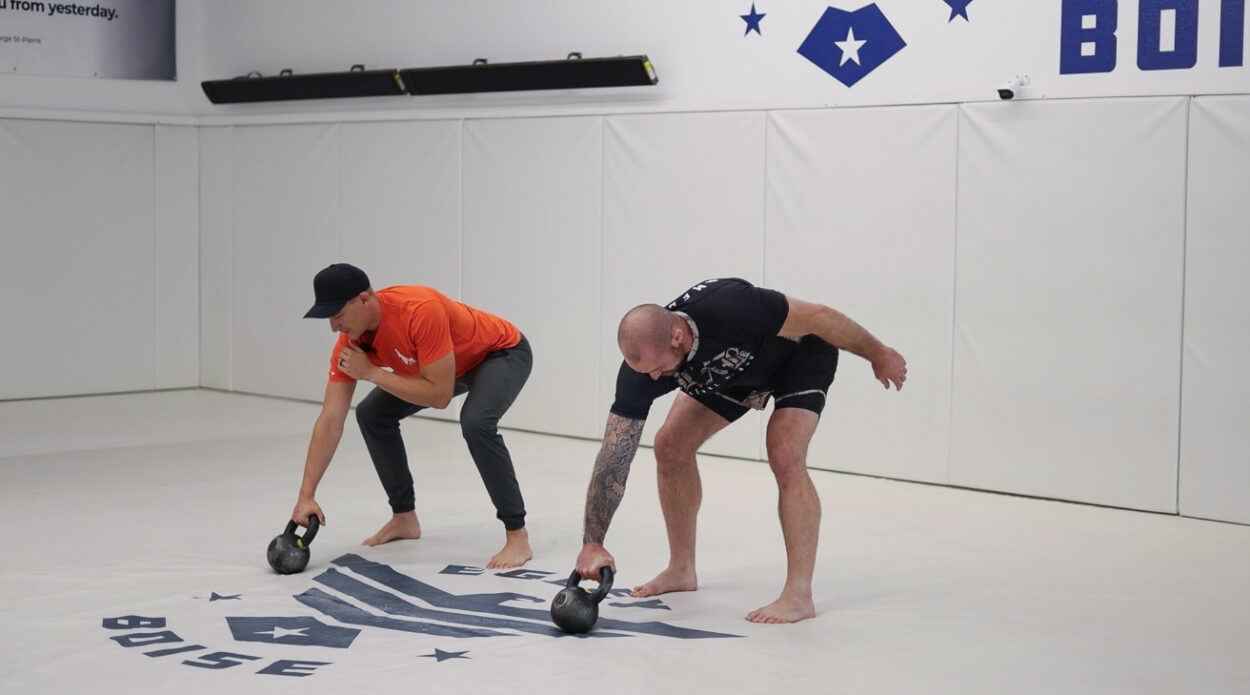
The kettlebell swing demands full explosion through the hips at the bottom — then a complete release at the float. If you stay tense at the top, you’re fighting gravity and your own grip simultaneously. The Turkish get-up requires one segment tight while everything else stays loose. You can’t fake it. The movement exposes the leak immediately.
What makes the kettlebell so effective as a teacher of selective tension is that it’s binary. You either fire and release, or you don’t. There’s no hiding behind momentum or muscle. The bell gives you instant feedback on whether you’re wasting energy.
And the practice transfers. Once your body learns the rhythm of tension and release under load, that pattern becomes available everywhere — on the mat, in a sparring round, in the moments between efforts where most people leak energy they don’t realize they’re spending.
The Deeper Practice
What I teach my students is simple: practice the transitions. Tension to relaxation. Relaxation back to tension. Over and over. Not just one state — a deeper practice with both.
Most people only train tension. They think that’s what hard work looks like. More effort. More grind. More force. And they wonder why they’re exhausted, injured, and plateaued.
The athletes who last — the ones still moving well at 40, 50, 60 — have mastered the other half. They’ve learned that relaxation isn’t the absence of effort. It’s a skill. One that requires just as much training as strength, just as much attention as power.
Beyond the Mat, Beyond the Bell
Here’s the part nobody talks about: selective tension isn’t just a training concept. It’s a life concept.
Watch someone who’s stressed at work. Shoulders up. Jaw tight. Shallow breathing. They’re carrying full-body tension through an eight-hour day with no physical threat in sight. Their nervous system doesn’t know the difference between a deadline and a rear naked choke. It just knows: danger. Brace. Hold.
The person who trains selective tension — who has spent hundreds of hours practicing the conscious transition from tension to release and back again — has a skill that most people never develop. They can feel the tension building. They can choose to let it go. Not because the pressure disappeared, but because they trained the ability to release what isn’t serving them in that moment.
That’s longevity. Not just in sport. In everything.
Learn to relax under pressure. Everything else builds from there.
A huge thank you to Matt Bostaph at Functional Idaho Strength & Mobility for Longevity for his coaching and guidance in developing my kettlebell practice. His teaching brought this principle to life in ways the mat alone couldn’t. If you’re serious about building functional strength, he’s the coach you want in your corner.
Experience Selective Tension Under Real Pressure
Reading about the tension-to-relaxation switch is one thing. Feeling it while someone is trying to pin you is something else entirely. If you train with Matt at Functional Idaho, I’m offering you a complimentary 2-week training pass at Egley Train Academy in Boise. Our 6-Week Beginner Course in American Jiu-Jitsu is built for people who’ve never stepped on a mat. You’ll feel the principle you already train with the kettlebell come alive in a completely new way.
Mention Matt or Functional Idaho when you book your intro lesson and the two weeks are on us. Book your free intro lesson here — no experience needed, call or text 208-291-8321, or visit egleytrain.com to get started.
Coach Michael Egley is the Head Coach and CEO of Egley Train Academy in Boise, Idaho — delivering empowerment through American Jiu-Jitsu, Muay Thai, and Meditative Arts.